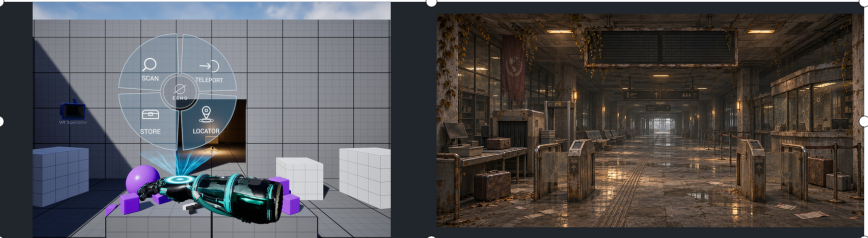
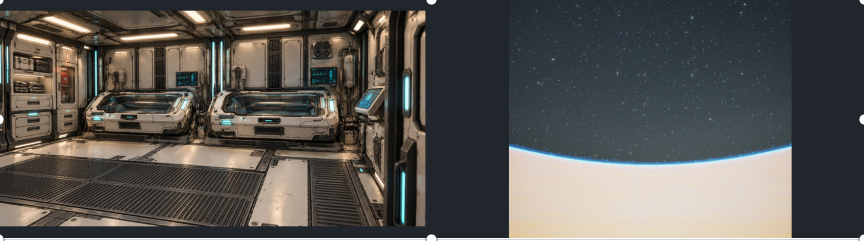
I then worked on travelling between the spacecraft and evacuation station. Keeping them in separate maps gave me room to set up their lighting independently. A ring spreading across the view gave the transition a visible action. While checking locomotion, I found issues with the spacecraft start height and the collision of the sky sphere. The station also gained a temporary floor so I could check light and valid teleport landings before the permanent environment was in place.
For the wrist equipment, I aligned the menu with its projected light and slowed the locator print to about four and a half seconds. I wanted the presentation to stay active until the player’s hand actually held the tool. In the station I pushed the lighting towards grey stone, cool shadow and a slight warm daylight.
This week, I continued working on the second draft of my thesis, focusing on refining my research question and strengthening the relationship between academic research and practical development.
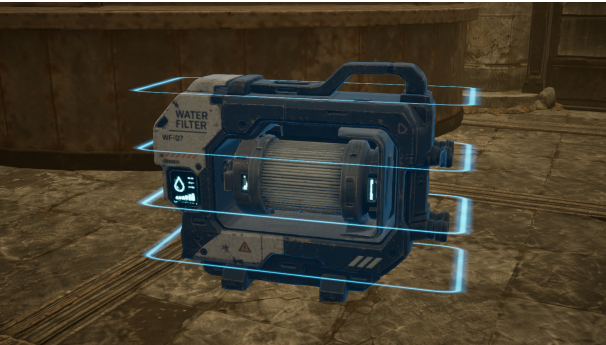
I further explored how environmental storytelling and digital preservation could influence the player’s understanding of the past. I wanted the player’s actions, particularly object investigation, scanning and recovery, to reflect the central research theme rather than simply function as gameplay tasks.
Writing the second draft also helped me reconsider how information should be presented at different stages of the experience.
Leave a Reply