I narrowed the written project around what can be learned from the objects a player finds, and what changes once those objects become archive records. In the screenplay I separated the three mission items from four supporting relics, then worked through which observations belonged to the scanner and which gaps would become visible in the later review. I also drafted the literature review and compared three narrative XR cases as part of the research milestone.
My September ChatGPT discussion still asked how embodied interaction and spatial storytelling might support emotional engagement. I used the October milestone to give the project a more specific object of study. I could now examine what the player sees in a room, what the scanner records and what the archive can infer. That framework also gave me a way to evaluate the donated book and letter without assuming how a player would feel.
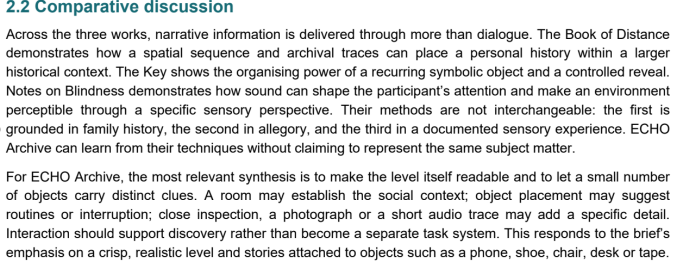
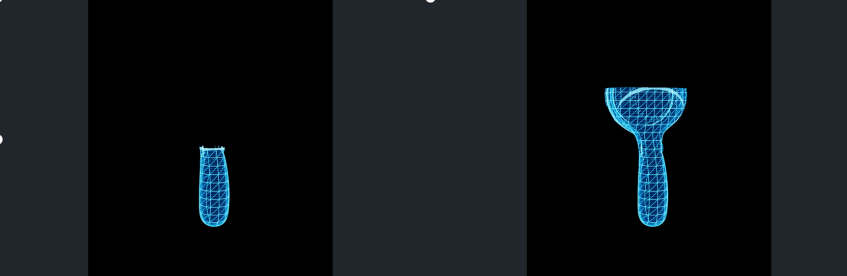
In Unreal, opening the menu had been taking control away from the movement sticks. I removed the conflicting menu bindings and retained the right-hand pointer and trigger for selection. I then worked on printing the scanner only after the menu had closed. The first sweep reveals its blue outline and the second makes the object solid. The version checks covered resources and compilation, with headset input still a separate check at this point.
Leave a Reply