Blog

  • Week 13 – 23.11 – 27.11 – FMP + thesis submission

    Final Development and Project Completion

    This week marked the final stage of ECHO Archive. I completed the remaining development tasks, refined the narrative, improved the VR interactions and finalised my thesis. My main focus was bringing all the individual elements together into a complete and coherent experience.

    Narrative and Environmental Storytelling

    A significant part of this week’s work involved completing the narrative details of the interactive objects.

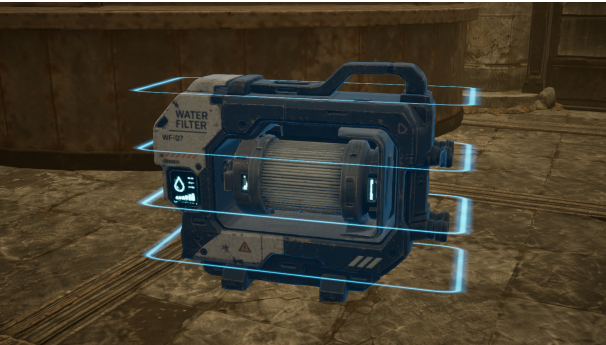
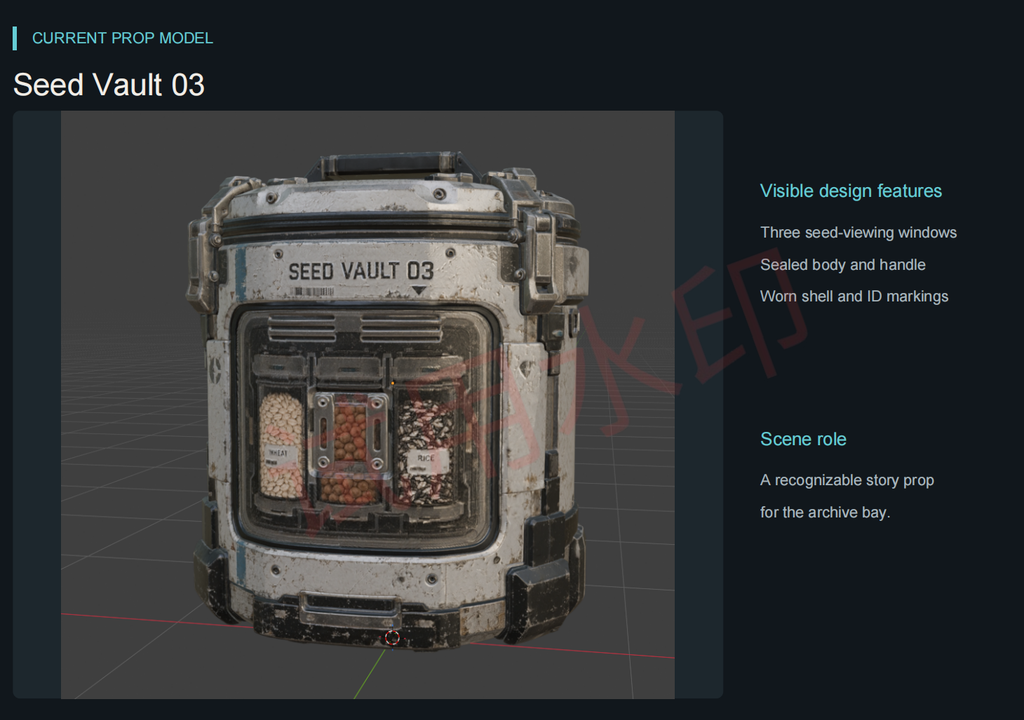
    The seven narrative objects provide different perspectives on humanity’s evacuation from Earth. The seed canister, water filter and Earth Restoration Archive Drive represent resources required for reconstruction, while the boarding pass, personal letter, picture book and time capsule reveal aspects of people’s everyday lives.

    I refined the appearance, written content and placement of these objects so that players could discover narrative information through observation and interaction.

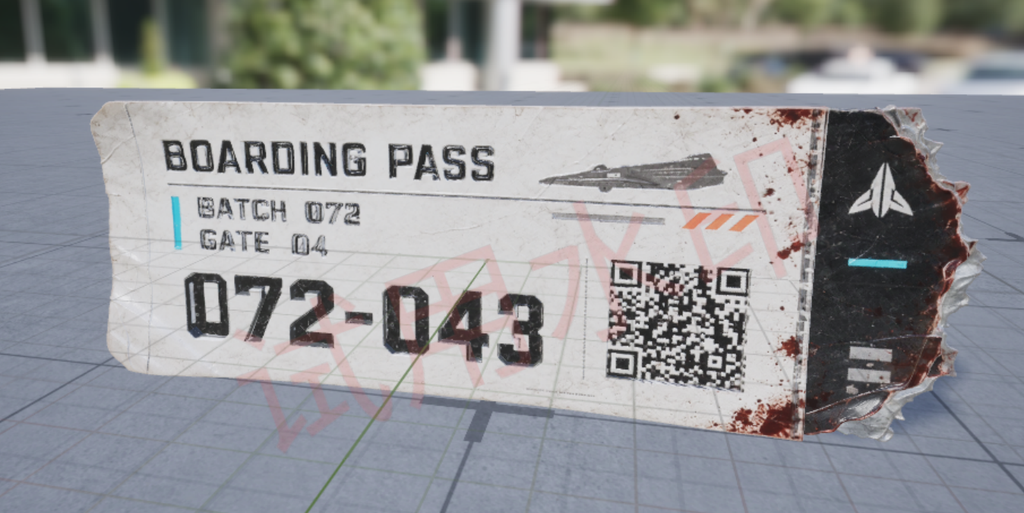
    I also wanted to distinguish between what players could directly observe and what they could only speculate about. For example, the bloodstained boarding pass suggests that something may have happened during the evacuation, but it does not provide enough evidence to determine the fate of its original owner.

    Narrative Animation and Visual Effects

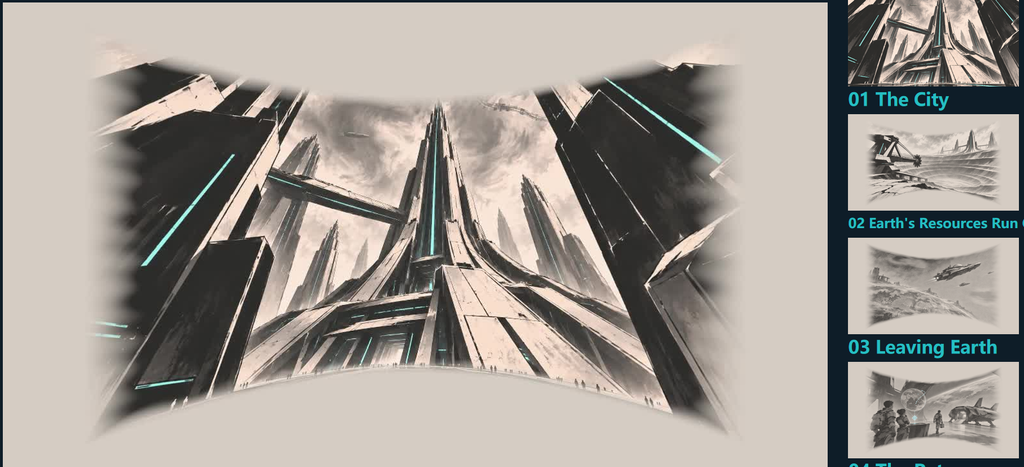
    I completed the narrative animations associated with the picture book and time capsule. These sequences allow players to experience imagined scenes connected to the objects they discover.

    The picture book animation depicts children playing before leaving Earth, while the time capsule animation presents an imagined shop and the everyday life associated with it.

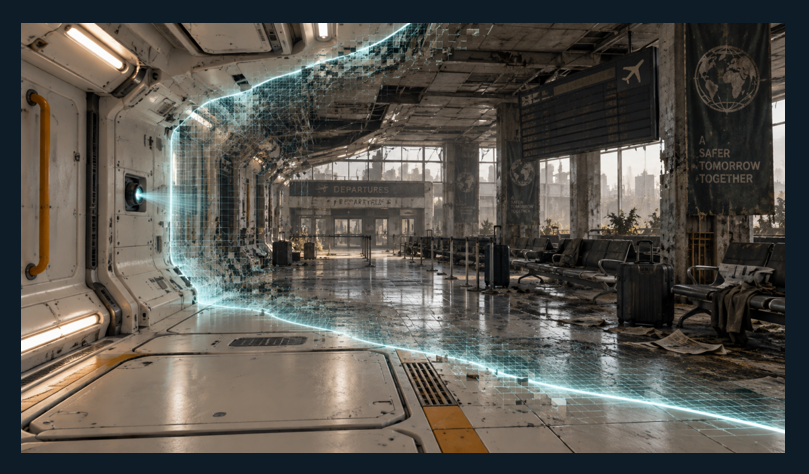
    I used point-cloud visual effects to create a distinction between the physical environment and reconstructed narrative information. The incomplete appearance of these scenes also reflects the limitations of reconstructing the past from fragmented evidence.
  • Week 12 – 16.11 – 20.11 – Self study

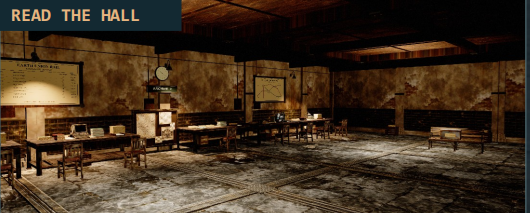
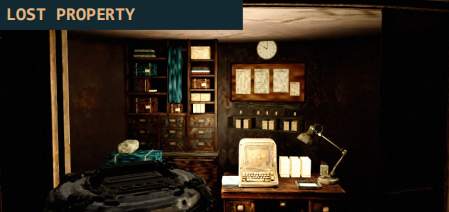
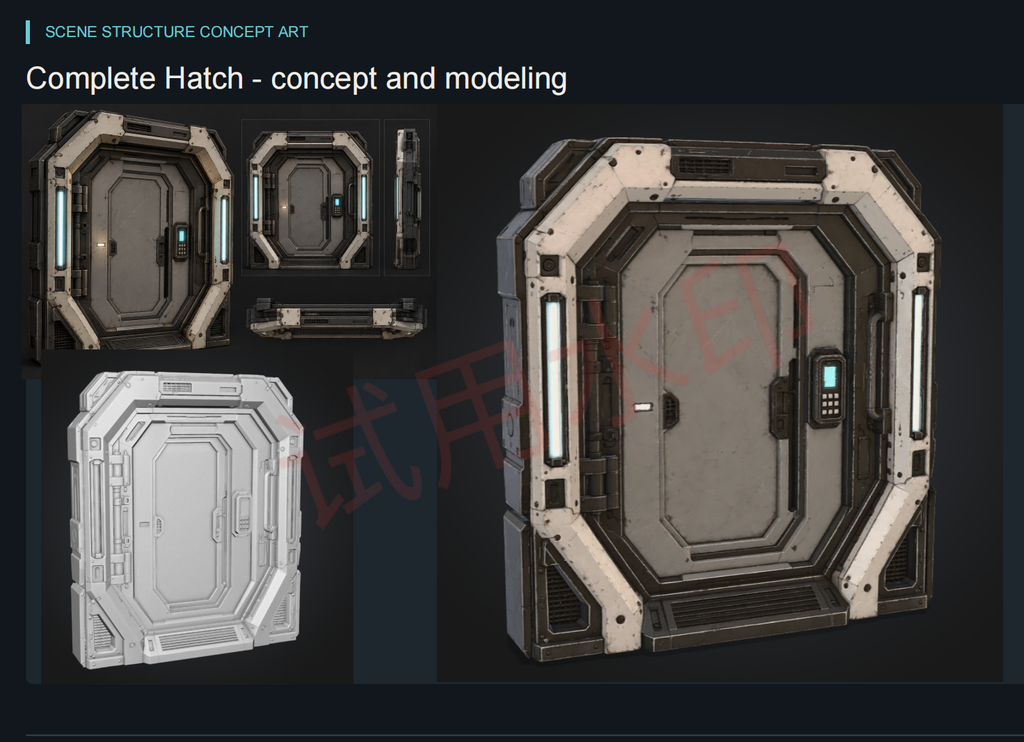
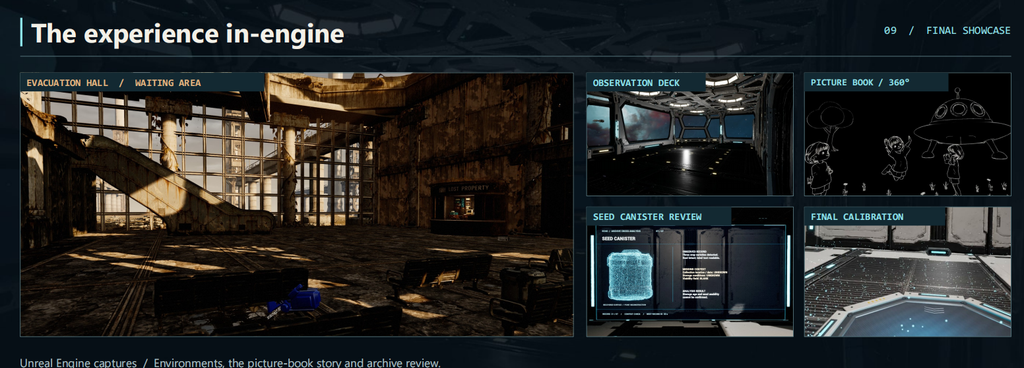
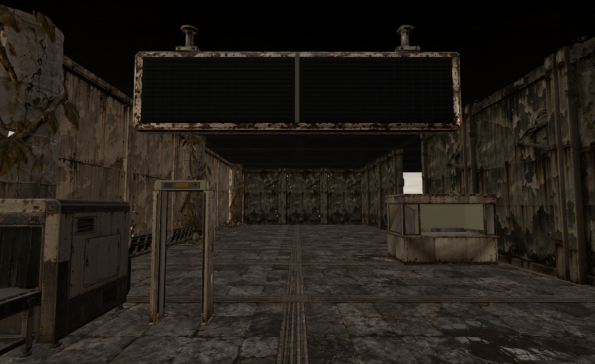
    I built out the boarding checkpoint with separate props and placed the personal relics together at lost property. That gave the player two different reasons to look around, finding the route through the station and inspecting objects that tell part of its history.

    I added the initial playtest’s recorded progression to the methodology. It showed that two participants collected the three key objects and reached archive analysis. I also worked on a more specific question for the project and started checking the return and review sequence in the editor. The review test gave me separate evidence of the upload gate and seven-record sequence.

  • Week 11 – 09.11 – 13.11 – Final crits

    I worked on making scan completion readable. A target had to stay under the beam for five seconds before the display changed from UPLOADING to SUCCESSFUL and the recovery state became available. I added a distinct voice cue to each of the three key items. In the same build I compared direct station loads with arrivals from Space, since arriving through the portal had been changing the shadows and brightness. The arrival check led to a refresh of the destination lighting and a delayed skylight capture.

    The Final Crit feedback gave me changes I could follow through. I narrowed the research question to my own game and reconsidered technical scan wording and the way I explained the opening.

    Core Gameplay Development

    This week, I completed the basic interaction systems and connected the main stages of the gameplay experience in ECHO Archive. The project has progressed from a collection of individual mechanics into a playable prototype with a more coherent narrative structure.

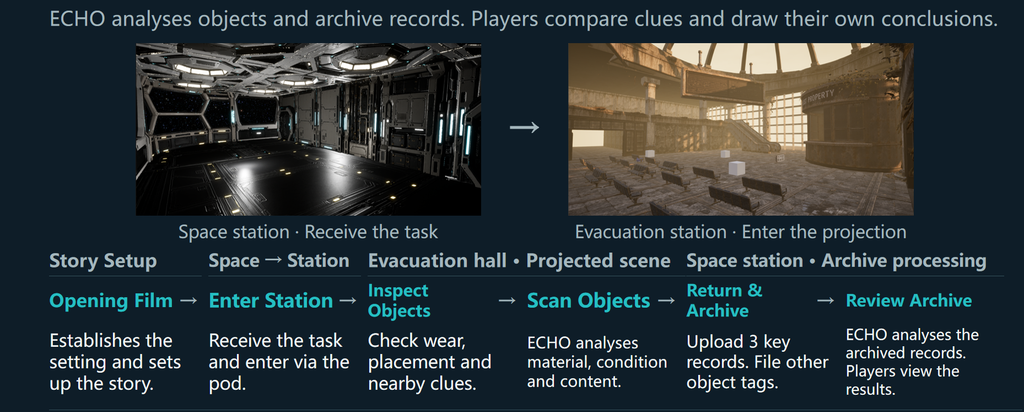
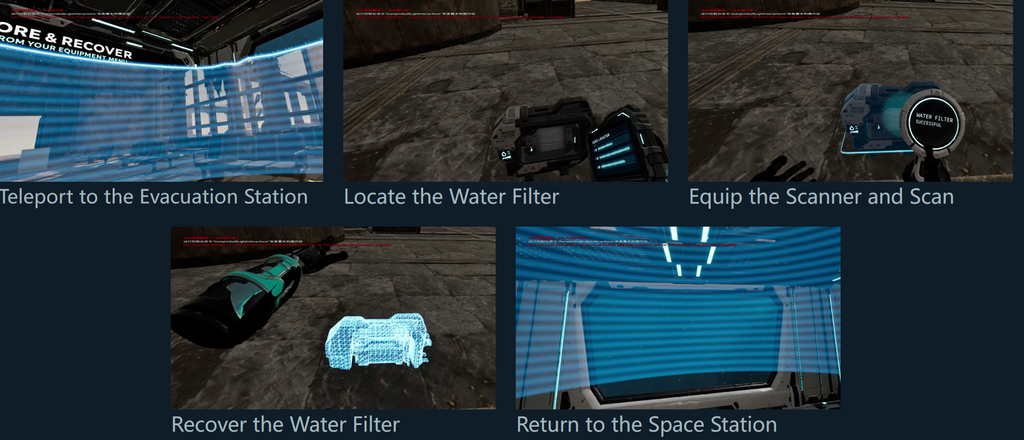
    The core gameplay loop consists of receiving a mission, travelling to the evacuation station, investigating objects, scanning and recovering materials, returning to the spacecraft and reviewing the collected records.

    My main objective was to ensure that each interaction had a clear purpose within the narrative, rather than functioning as an isolated gameplay mechanic.

    VR Interaction and Player Guidance

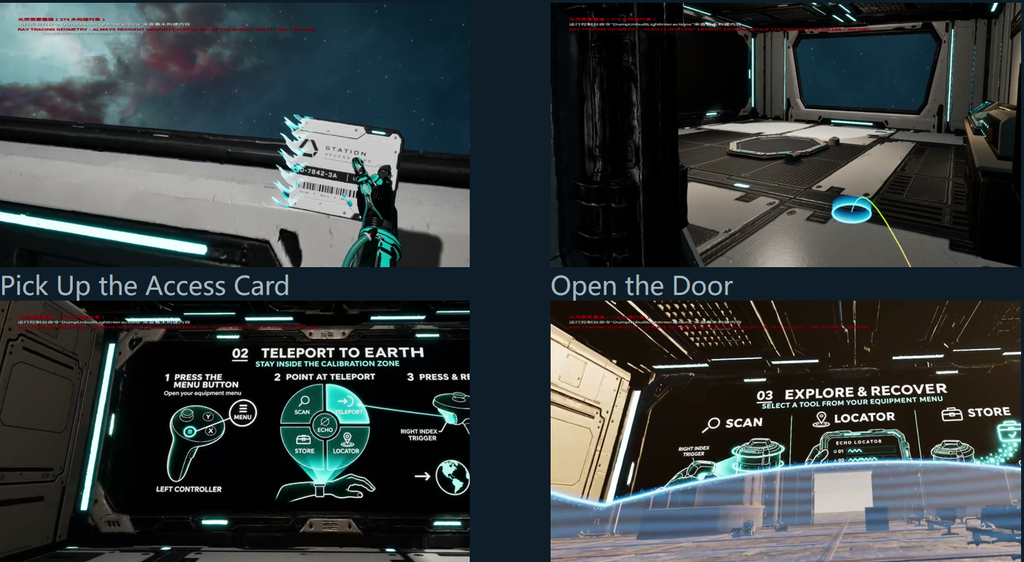
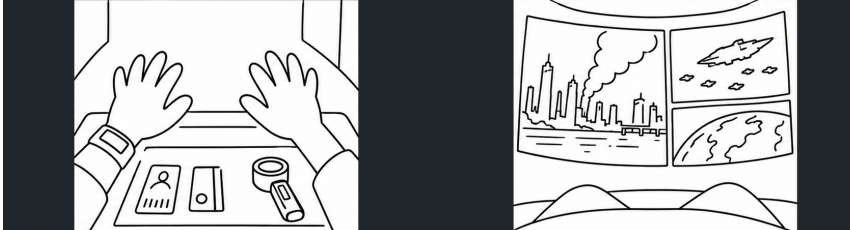
    I completed several essential interactions, including picking up the access card, opening doors, using the wrist menu, teleporting between environments, locating objects, scanning and recovering mission items.

    I also developed instructional screens to introduce the controls and explain the player’s objectives. These screens were integrated into the spacecraft environment to maintain the visual consistency of the experience.

    Instead of introducing every interaction simultaneously, I wanted players to become familiar with the controls gradually. Picking up the access card and opening the door introduces basic interaction before players begin using more complex tools.

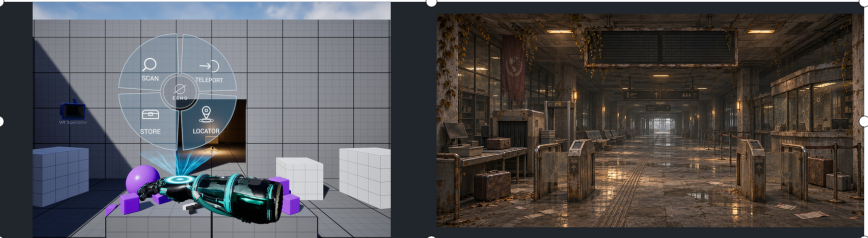
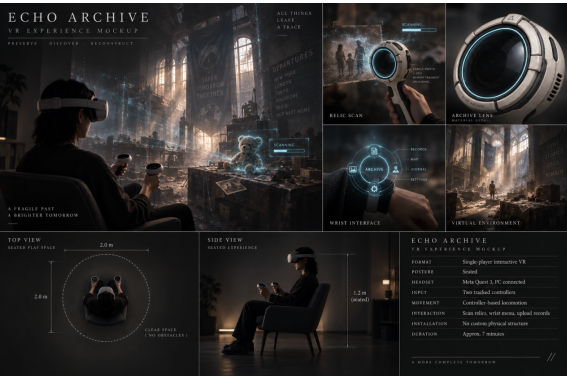
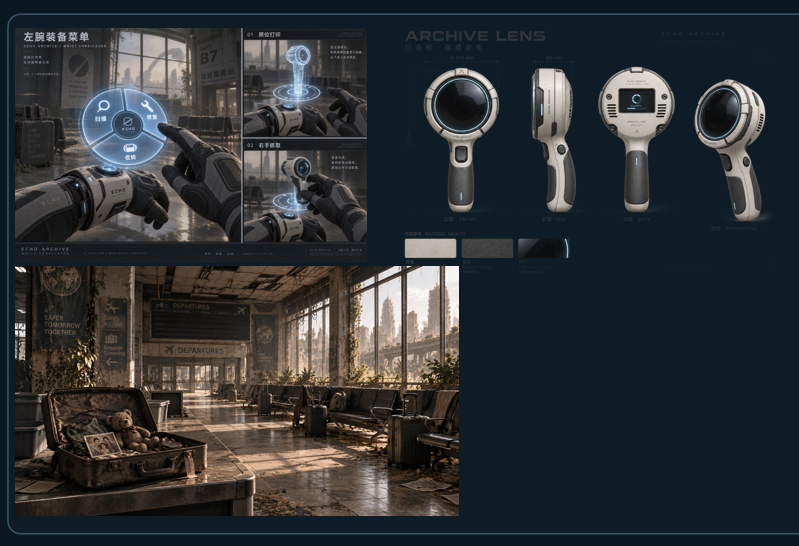
    The wrist menu provides access to four main functions: SCAN, TELEPORT, STORE and LOCATOR. This allows players to access different tools without relying on a conventional on-screen interface.

  • Week 10 – 02.11 – 06.11 – Thesis 2nd Draft

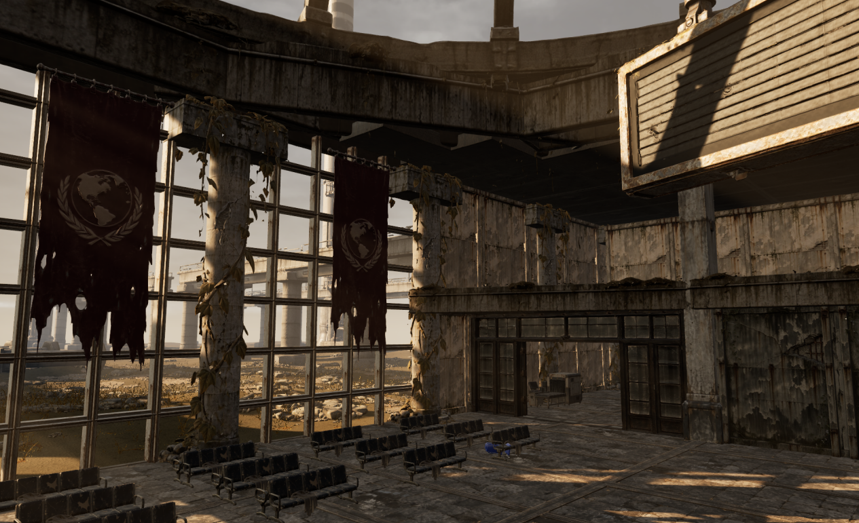
    I then worked on travelling between the spacecraft and evacuation station. Keeping them in separate maps gave me room to set up their lighting independently. A ring spreading across the view gave the transition a visible action. While checking locomotion, I found issues with the spacecraft start height and the collision of the sky sphere. The station also gained a temporary floor so I could check light and valid teleport landings before the permanent environment was in place.

    For the wrist equipment, I aligned the menu with its projected light and slowed the locator print to about four and a half seconds. I wanted the presentation to stay active until the player’s hand actually held the tool. In the station I pushed the lighting towards grey stone, cool shadow and a slight warm daylight.

    This week, I continued working on the second draft of my thesis, focusing on refining my research question and strengthening the relationship between academic research and practical development.

    I further explored how environmental storytelling and digital preservation could influence the player’s understanding of the past. I wanted the player’s actions, particularly object investigation, scanning and recovery, to reflect the central research theme rather than simply function as gameplay tasks.

    Writing the second draft also helped me reconsider how information should be presented at different stages of the experience.

  • Week 9 – 26.10 – 30.10 – Self study

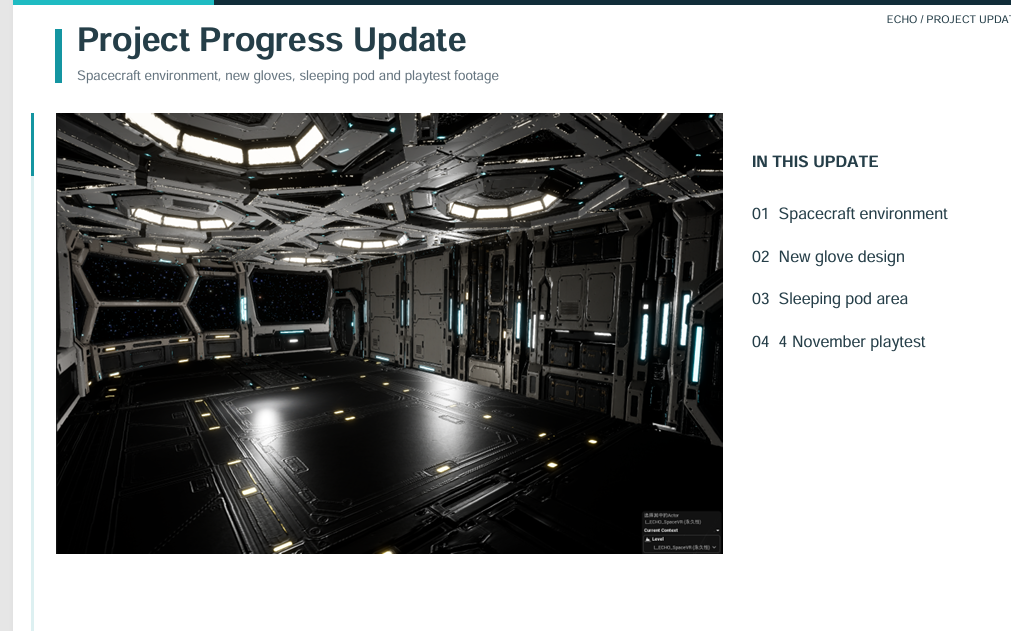
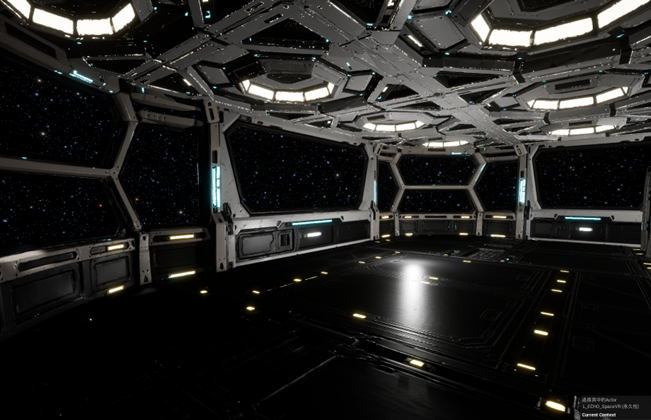
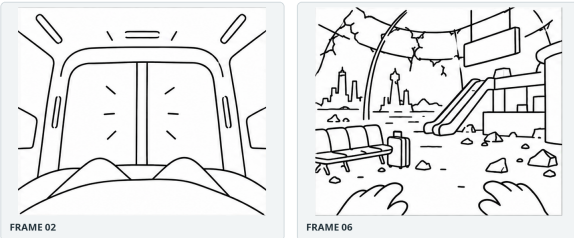
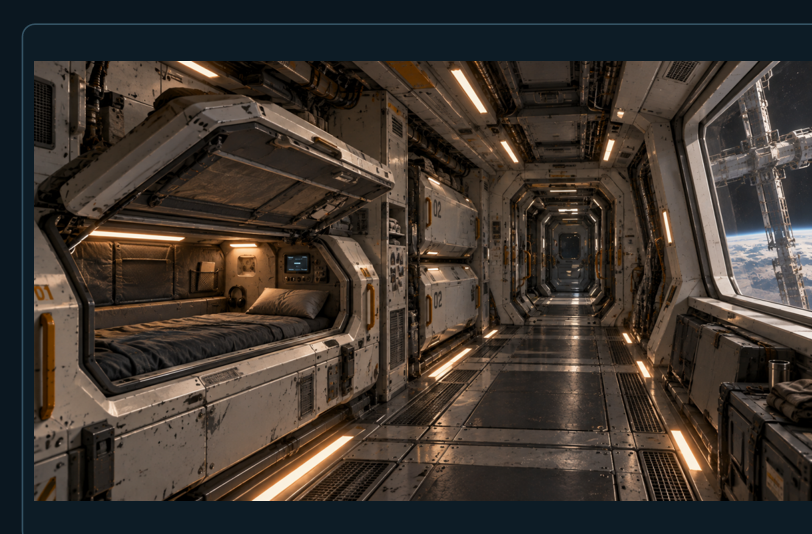
    This week, I returned my focus to the practical development of ECHO Archive, particularly the spacecraft interior. I continued refining the environment by developing its walls, ceiling, floor panels, lighting and structural details.

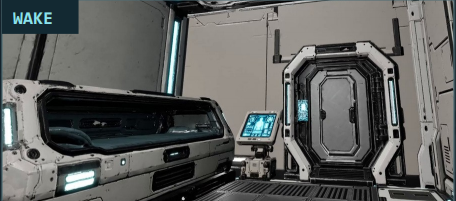
    I wanted the spacecraft to feel like a functional living and working environment rather than simply a futuristic room. I used dark metallic materials, white structural panels and cyan lighting to establish a consistent science-fiction visual identity.

    I also considered how the lighting and architectural features could guide players through the environment. Since the spacecraft serves as both the starting point and the destination after completing the recovery mission, its spatial organisation is important to the overall gameplay experience.

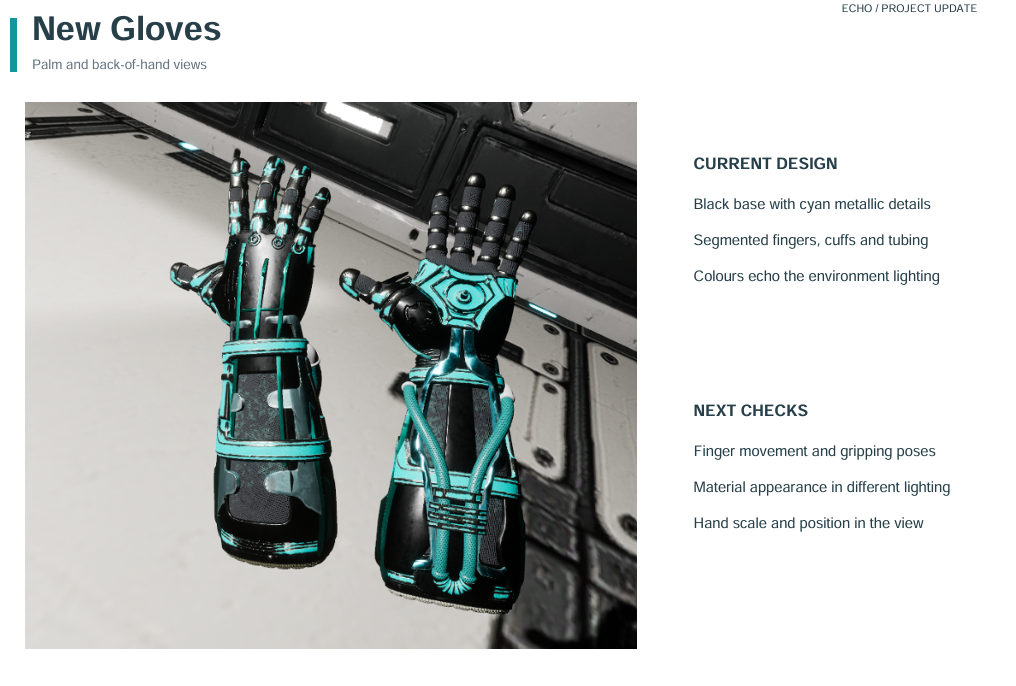
    In VR, the player’s hands are among the most frequently visible elements. Therefore, their design contributes significantly to the player’s sense of embodiment and connection with the virtual character.

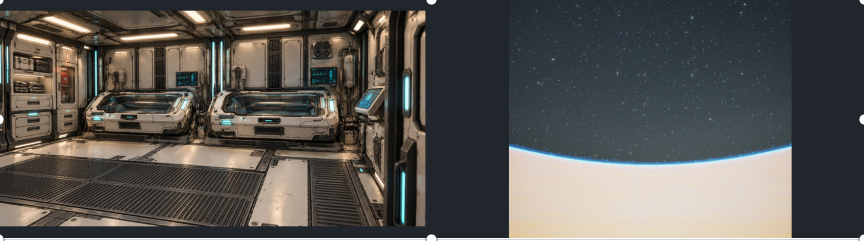
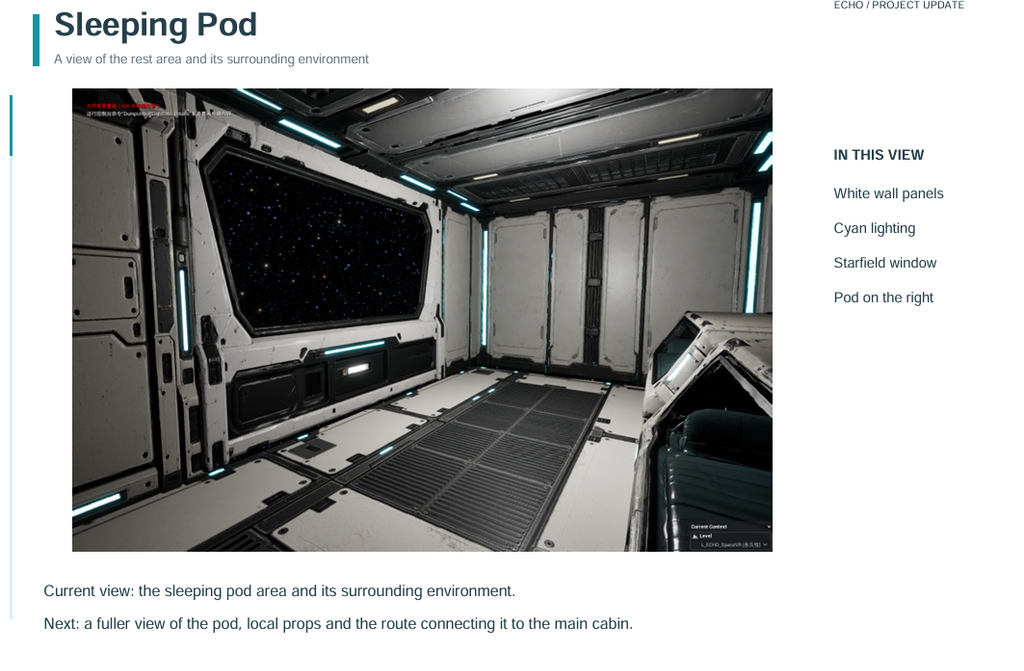
    I also developed the sleeping pod area inside the spacecraft. Compared with the main cabin, this area uses brighter wall panels and a more enclosed spatial arrangement to create a quieter atmosphere.

  • Week 8 – 19.10 – 23.10 – Degree show kick-off

    This week, I spent most of my time developing and refining my thesis. Compared with the first draft, I wanted to establish a clearer research direction and strengthen the connection between my academic research and the practical development of ECHO Archive.

    My research gradually shifted towards the relationship between physical objects, digital preservation and human experience. I began to question whether preserving an object or its digital information could also preserve the experiences and memories associated with it.

    For example, a personal letter may retain its written content, but it cannot necessarily communicate the complete relationship between the people who wrote and received it. This distinction encouraged me to think more carefully about what information can be preserved and what may be lost.

  • Week 7 – 12.10 – 16.10 – Self study

    I turned the screenplay into a production storyboard and an event list. The event list broke the experience into fifteen events. I wrote down who acts, what starts the next event and which change the player can see or hear. The storyboard added a proposed timetable for the three spaces: waking and preparing on the spacecraft, investigating the evacuation station and reviewing the archive.

    In the opening I separated the boot sound, the view of the display and the point where the player looks down at their hands. At the calibration ring, I treated entering the ring as a player action and the environment changing as a separate stage. The seven-minute timing was a planning target. It let me see how much of the opening depended on a player learning a control and which parts could move on automatically.

    I found that the prototype cabin was too large against the player reference. The sphere I was using as a stand-in for a person measured 360.94 cm. To make it represent 170 cm, I scaled the sphere and forty-eight blockout pieces to 47.10 per cent of the previous size. I adjusted their positions around the same reference and moved PlayerStart with them, preserving the layout. Reloading the map confirmed the saved scale.

    I also built a blue scan beam and gave it a distinct hit marker. The player could summon the scanner first, then hold the right index trigger to project the beam. I continued designing modules for the observation corridor and archive bay alongside these checks. The scale pass gave me a consistent starting point for later placements such as opening widths, window supports and equipment height.

  • Week 6 – 05.10 – 10.10 – Thesis 1st draft (continued)

    I narrowed the written project around what can be learned from the objects a player finds, and what changes once those objects become archive records. In the screenplay I separated the three mission items from four supporting relics, then worked through which observations belonged to the scanner and which gaps would become visible in the later review. I also drafted the literature review and compared three narrative XR cases as part of the research milestone.

    My September ChatGPT discussion still asked how embodied interaction and spatial storytelling might support emotional engagement. I used the October milestone to give the project a more specific object of study. I could now examine what the player sees in a room, what the scanner records and what the archive can infer. That framework also gave me a way to evaluate the donated book and letter without assuming how a player would feel.

    In Unreal, opening the menu had been taking control away from the movement sticks. I removed the conflicting menu bindings and retained the right-hand pointer and trigger for selection. I then worked on printing the scanner only after the menu had closed. The first sweep reveals its blue outline and the second makes the object solid. The version checks covered resources and compilation, with headset input still a separate check at this point.

  • Week 5 -21.09 – 25.09 – Thesis 1st draft

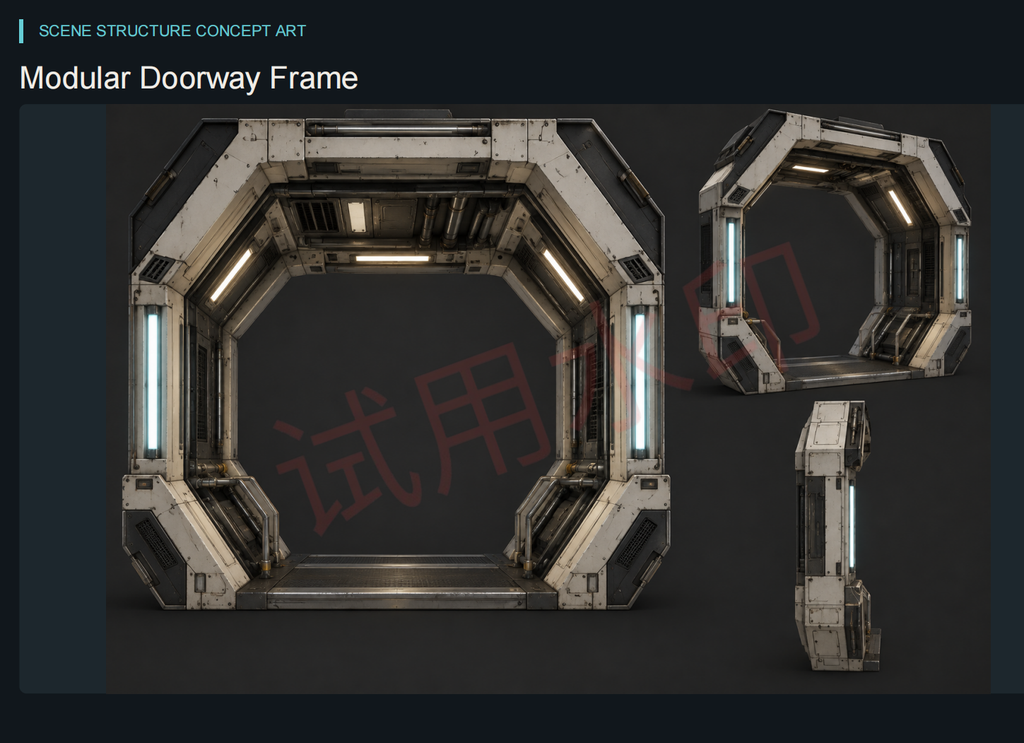
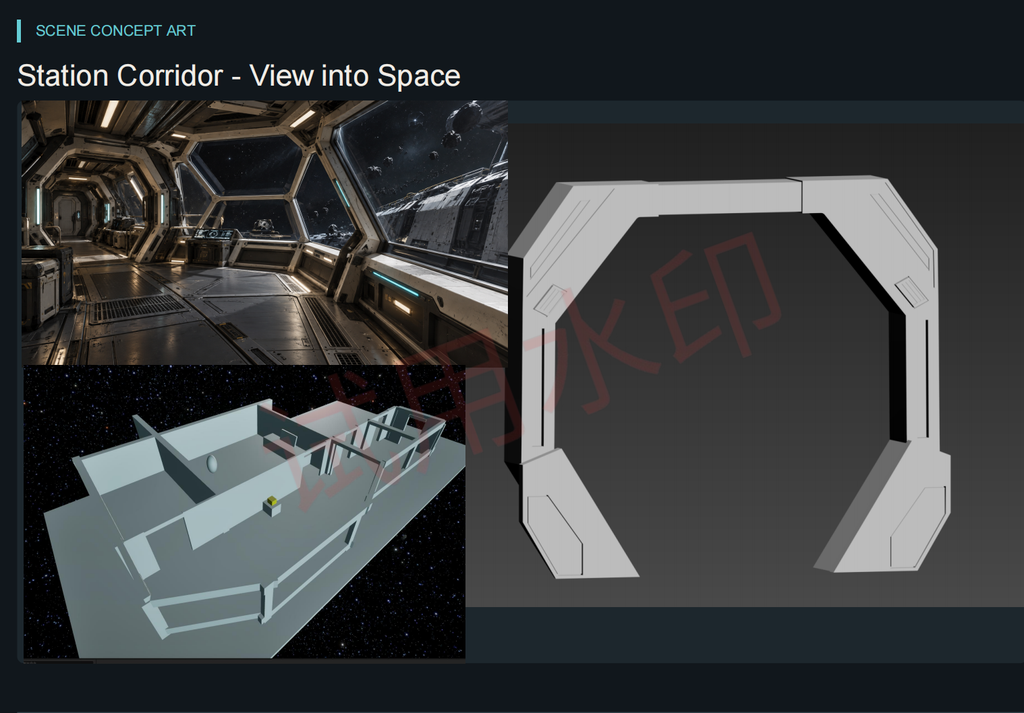
    I started planning the spacecraft from the player’s position inside the room, looking through a window into open space. That gave me two separate jobs: finding a suitable sky background and deciding which parts of the cabin could be built as repeatable modules. I broke the window area down into the frame, glass, floor pieces and supports so each part could be adjusted independently.

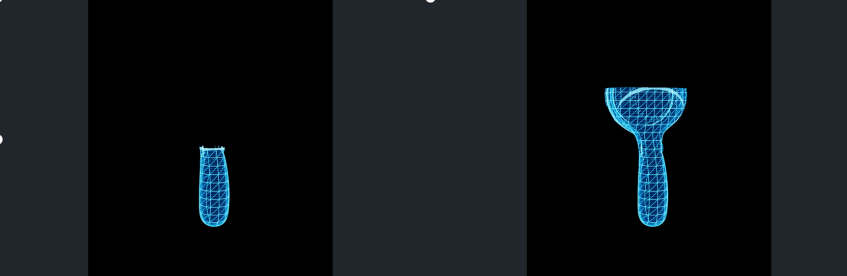
    In the same week I drew up the wrist menu and scanner. The scanner reference showed the lens, handle and rear display from several angles. The first working menu used three selectable sectors, SCAN, RETURN and STORE, with a brighter hover state under the right-hand pointer. A Blueprint-opening crash interrupted the first integration. After the plugin was rebuilt, I could reopen the project and check the menu asset and Blueprint reference. The desktop test let me inspect the interface while the Quest was unavailable.

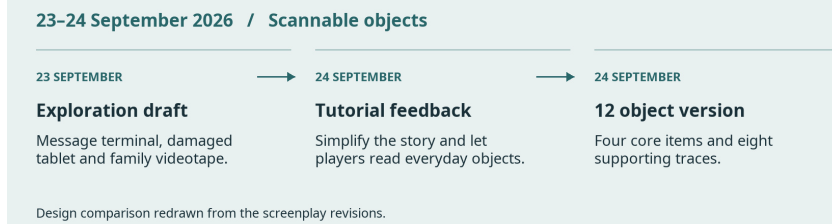
    I rewrote Scene 03 around objects that could suggest how people had used the evacuation station. I tried message terminals, a damaged tablet and family video, then looked at how a much larger list of everyday objects might work with short archive text. The tutorial feedback made me reconsider how much I was asking the player to read. I brought the next version down to twelve scannable objects and replaced the bedroom with a temporary rest area beside the waiting benches.

    I also simplified the spaceship layout in the script. Upload and analysis could happen in the same room, with a change of display and lighting. I removed the player’s dialogue and left ECHO and the displays to carry spoken and written information. Updating the English and Chinese scripts together helped me catch changes that also affected the later recovery and review scenes.

  • Week 4 – 14.09 – 18.09 – Back to school tutorials

    During the summer break, I began developing the initial prototype of ECHO Archive in Unreal Engine. My main focus was on building the environment and implementing the basic VR interaction mechanics.

    I started by establishing the spatial layout and creating the initial environment assets. I experimented with the scale of the environment, lighting, materials and object placement to establish a suitable atmosphere for the narrative. Since this is a VR experience, I also needed to consider how the environment would feel from the player’s perspective rather than simply how it looked on a computer screen.

    At this stage, I realised that creating an visually convincing environment was only one part of the project. The more important challenge was designing meaningful reasons for players to explore and interact with it.

    My next step is to refine the narrative structure, develop more specific object interactions and establish a clearer gameplay loop. I also want to continue testing the environment in VR to identify potential problems with spatial scale, navigation and interaction accessibility.